There’s a moment every beginner mechanic remembers: the first bolt that simply refuses to move. Mine looked completely ordinary. A little dirty. A little rusty. Nothing dramatic. I put the socket on it, grabbed the ratchet and pulled. Nothing. I pulled harder. Still nothing. At that point, I made the mistake almost everyone makes at least once: I decided the solution was obviously more force.

It Was Just One Bolt
I expected the job to be easy. The socket seemed to fit, the ratchet was seated, and there was nothing about the fastener that announced a long afternoon. I tried a longer handle for more leverage. Still nothing.
Of course, “nothing” does not mean the bolt has a personality problem. Time, corrosion, contamination, repeated heat cycles, and environmental exposure can all change how a fastener behaves. I did not know which combination I was dealing with yet. I only knew I was not moving it.
So I Pulled Harder
This is the instinct: if something does not move, use more force. I reached for the breaker bar. More torque felt like progress, even though the bolt had not given me any new information.
That is the uncomfortable part about force. It can solve a problem, but it can also round a fastener, damage a tool, snap the bolt, hurt a nearby component, or send my knuckles somewhere they absolutely did not need to go. Frustration makes all of those outcomes feel surprisingly reasonable.
Then I Stopped
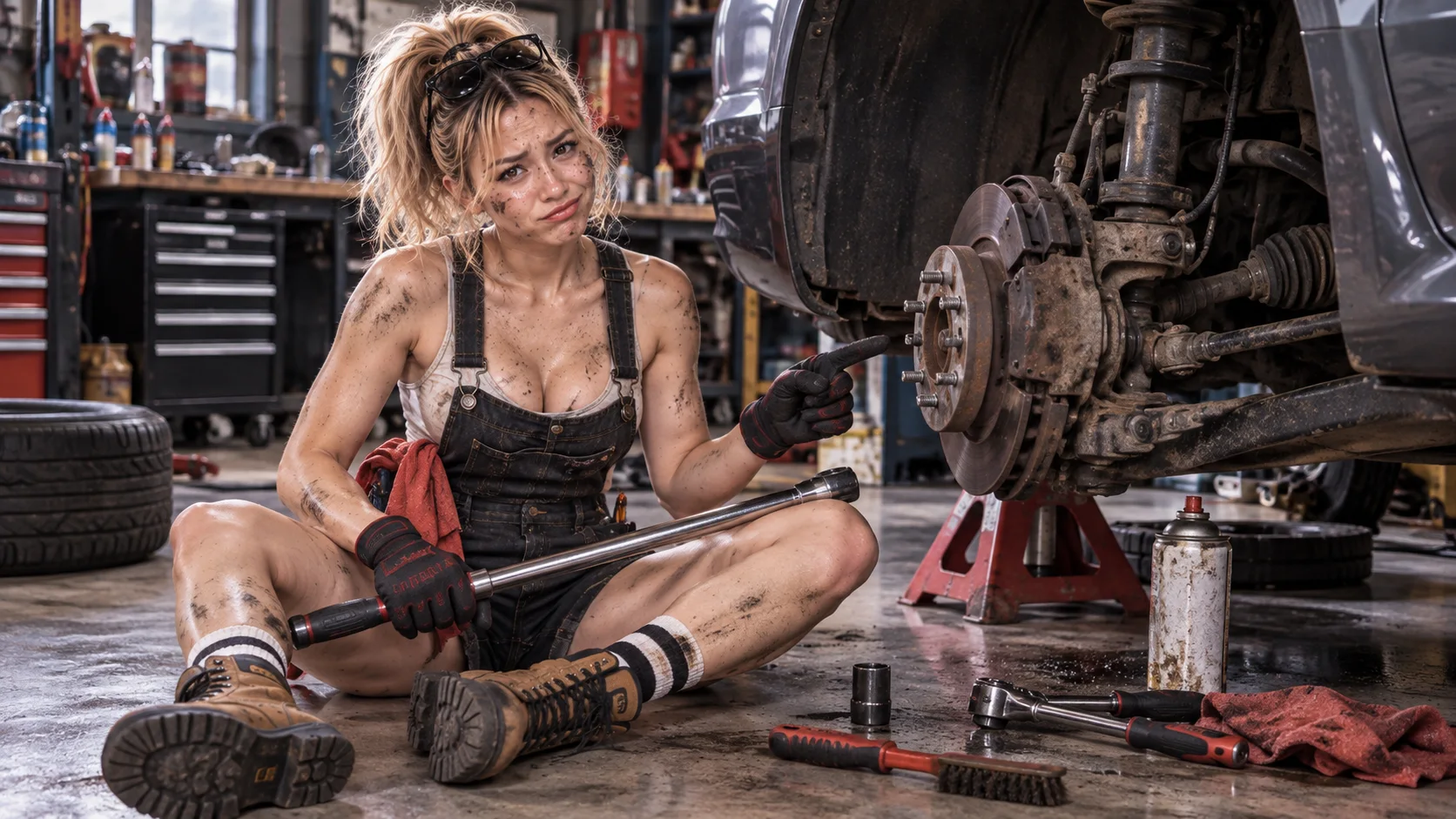
I put the breaker bar down and picked up a flashlight. Instead of pulling, I looked. I checked the fastener, the socket engagement, the available access, and the parts around it. The job became less about winning an argument with one bolt and more about figuring out what I was actually fighting.
What Was I Actually Fighting?
Was this corrosion? Was the socket really fitting correctly? Was I using the right socket type? Did I have enough access? From this viewing angle, was I turning in the correct direction? Would an appropriate penetrating oil help, and was there a vehicle-specific service procedure I needed to understand first?
I also thought about heat. Heat is not a universal answer, and it can be unsafe near fuel, brake components, rubber, wiring, or flammable materials. It was not the moment to improvise with a torch just because I was annoyed.
The Tool Fit Matters
A correctly sized, well-seated socket matters more than I wanted to admit. A six-point socket may provide better contact on a stubborn conventional hex fastener than some alternatives, depending on the application. Bad engagement combined with excessive force is a very efficient way to damage the thing you are trying to remove.
Leverage Is Powerful — And That's the Problem
The simple version of the physics is torque ≈ force × lever arm. A longer breaker bar means the same force from my hands can produce more torque. That is useful. It also means more leverage does not know whether it is loosening the bolt or destroying it.
What Finally Worked
I cleaned and inspected the area, verified the tool fit, used an appropriate penetrating oil where it made sense, and gave it time. Then I repositioned myself for controlled leverage and tried again carefully. Eventually, the fastener moved.
The payoff was not that I had defeated the bolt. I had finally stopped fighting it blindly.
What That Bolt Taught Me
Stop before frustration becomes damage. Use the right tool, not just a bigger tool. Understand why something is stuck. Leverage multiplies mistakes too. And patience is a workshop skill, even if it is not printed on the side of a toolbox.
Final Thoughts
I don’t remember how many bolts I’ve removed since then. But I remember that one. Not because it was particularly important. Because it was the first time a machine forced me to stop trying harder and start thinking better.
And honestly? That lesson has been useful far beyond one stubborn bolt.